

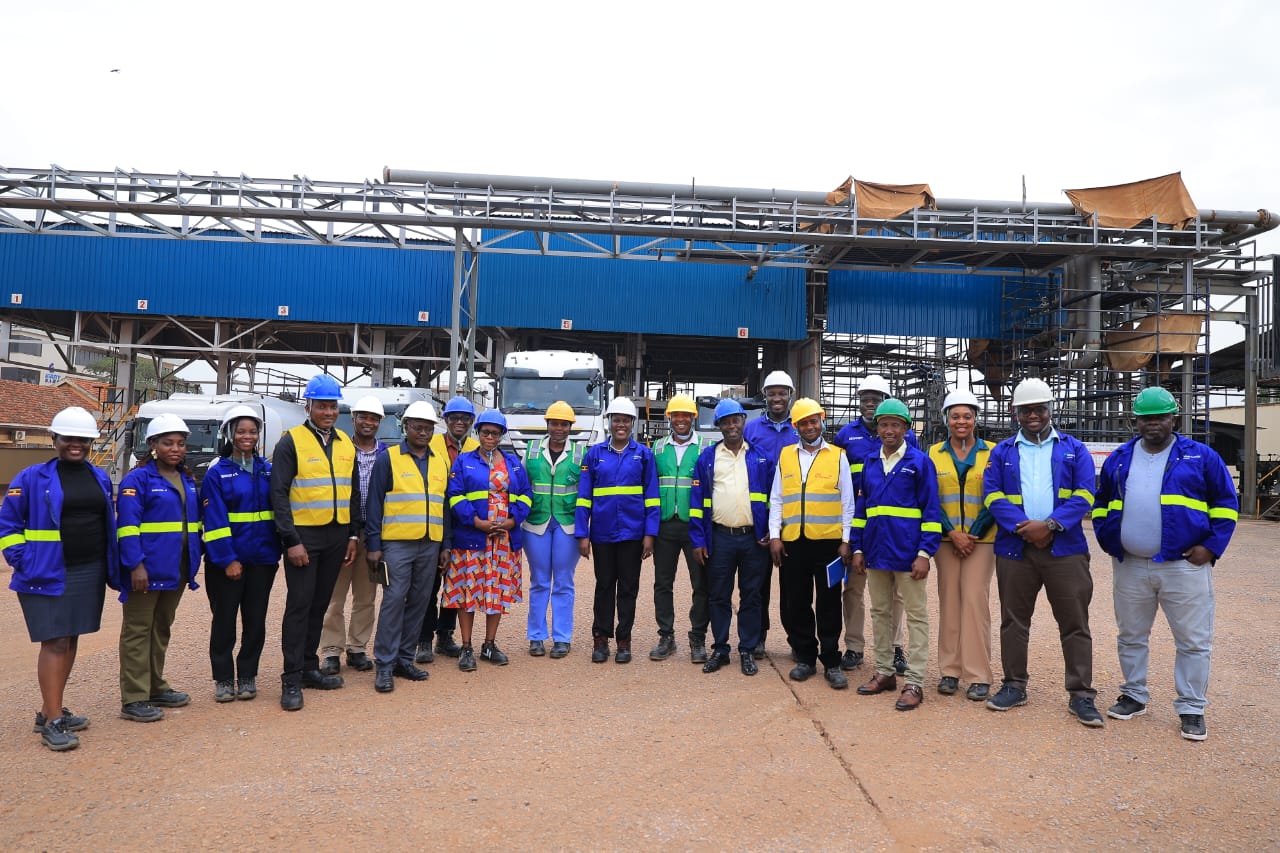
Vivo Energy Uganda, the company that distributes and markets Shell-branded fuels, lubricants and LPG, has hosted key stakeholders from Uganda’s passenger transport sector for a guided tour of its Kampala Depot and Tank Farm, giving them an inside look at the systems used to ensure fuel quality and reliability before products reach the market.
The engagement brought together leaders from the Federation of Uganda Taxi Operators (UTOF), representatives of the boda boda community, media practitioners and digital content creators.
The visit formed part of the company’s efforts to strengthen transparency around its operations and demonstrate the processes that support the Shell brand’s performance standards.
During the tour, participants visited the two fuel depots, the LPG filling plant and the product quality laboratory, where they observed how fuels and lubricants are received, tested, stored and dispatched before being distributed across the country.
Officials explained that the facility operates a multi-stage quality assurance process in which every batch of product is sampled and tested in the laboratory before it is cleared for delivery to customers.
According to Joanita Mukasa Menya, Managing Director of Vivo Energy Uganda, opening the depot to stakeholders reflects the company’s commitment to transparency and to strengthening confidence in the integrity of the fuel supply chain.
She noted that while Shell products are widely recognised for their quality, it is important for stakeholders to understand the operational discipline that ensures every litre meets strict international specifications.
“Trust in energy products is built through consistency and transparency. By hosting stakeholders at our operations, we are demonstrating the systems, technology and expertise that ensure Shell fuels, lubricants and LPG meet the highest standards before reaching our customers,” she said.
Menya also revealed that the company’s Kampala Tank Farm hosts the first ISO/IEC 17025-accredited fuel quality laboratory of its kind, which applies globally recognised standards, tools and methodologies in testing and calibration of petroleum products.
She explained that the laboratory plays a key role in verifying product integrity and ensuring compliance with both international specifications and national regulatory requirements.
The engagement also highlighted the company’s continued investment in infrastructure, operational technology and skills development aimed at supporting Uganda’s growing energy demand and maintaining reliable supply for motorists, businesses and households.
Menya further explained that Shell fuels are formulated with advanced additive technology that helps clean and protect engines, improving combustion efficiency and maintaining engine responsiveness.
Combined with high-performance Shell lubricants designed to reduce friction and withstand demanding operating conditions, the products help reduce engine wear, lower maintenance costs and extend vehicle life.
“For commercial transport operators, better engine protection and improved fuel performance translate directly into lower operating costs, fewer service interruptions and more productive hours on the road,” Menya noted.
Rashid Ssekindi, Chairman of the Federation of Uganda Taxi Operators, welcomed the engagement, noting that access to reliable fuel and lubricants is critical to the efficiency and sustainability of passenger transport operations.
“We appreciate the opportunity to see the systems and processes that ensure fuel quality before it reaches the market. For taxi operators whose livelihoods depend on vehicle performance, reliable fuel helps reduce maintenance costs, improve efficiency and keep vehicles on the road serving passengers,” Ssekindi said.
Safety was also emphasised during the tour, with stakeholders taken through the company’s strict Health, Safety, Security and Environmental procedures that guide product handling, storage and dispatch at the depot and LPG filling plant.
The visit reflects Vivo Energy Uganda’s ongoing efforts to promote responsible operations, strengthen customer trust and continue investing in systems that deliver safe, reliable and high-quality energy solutions across the country.
